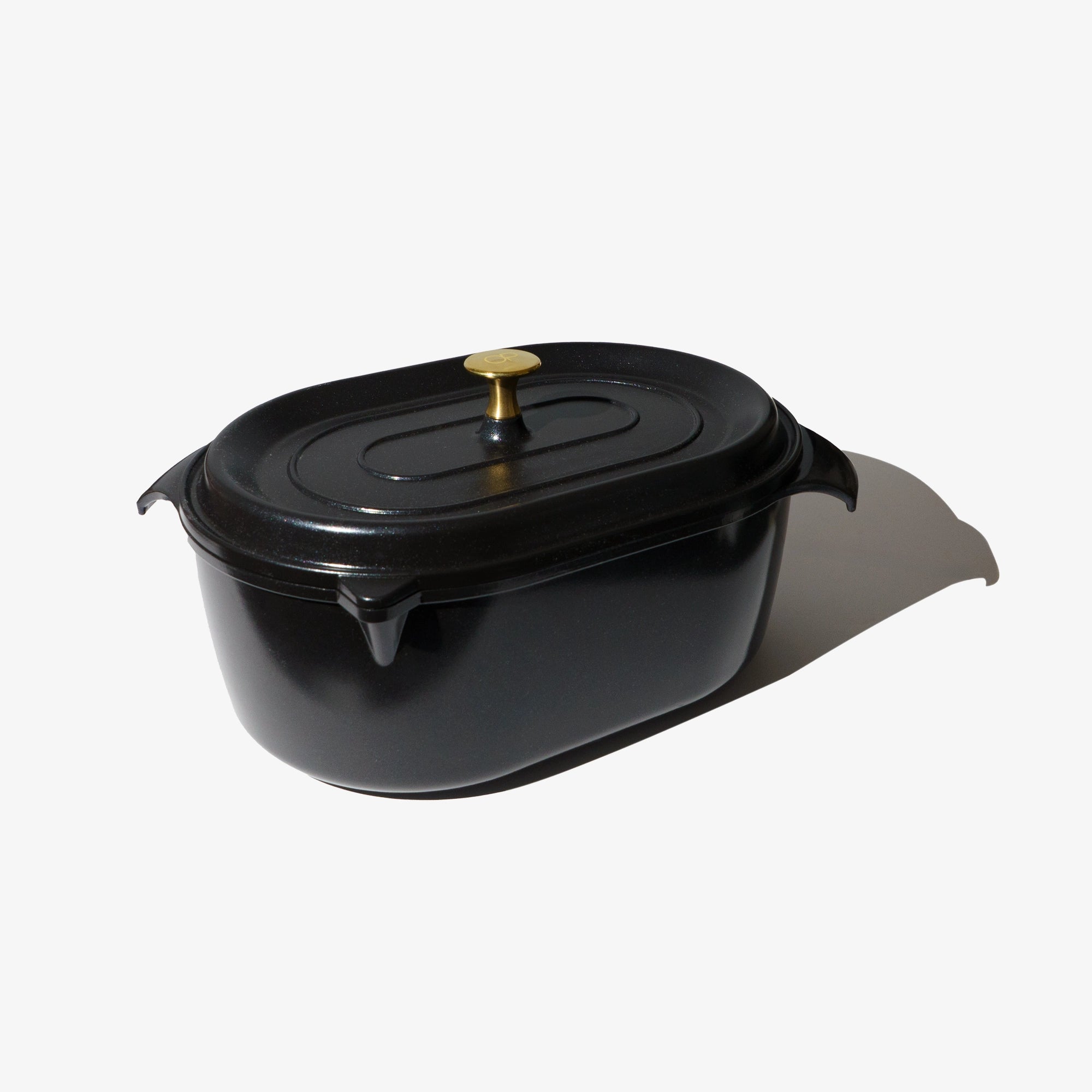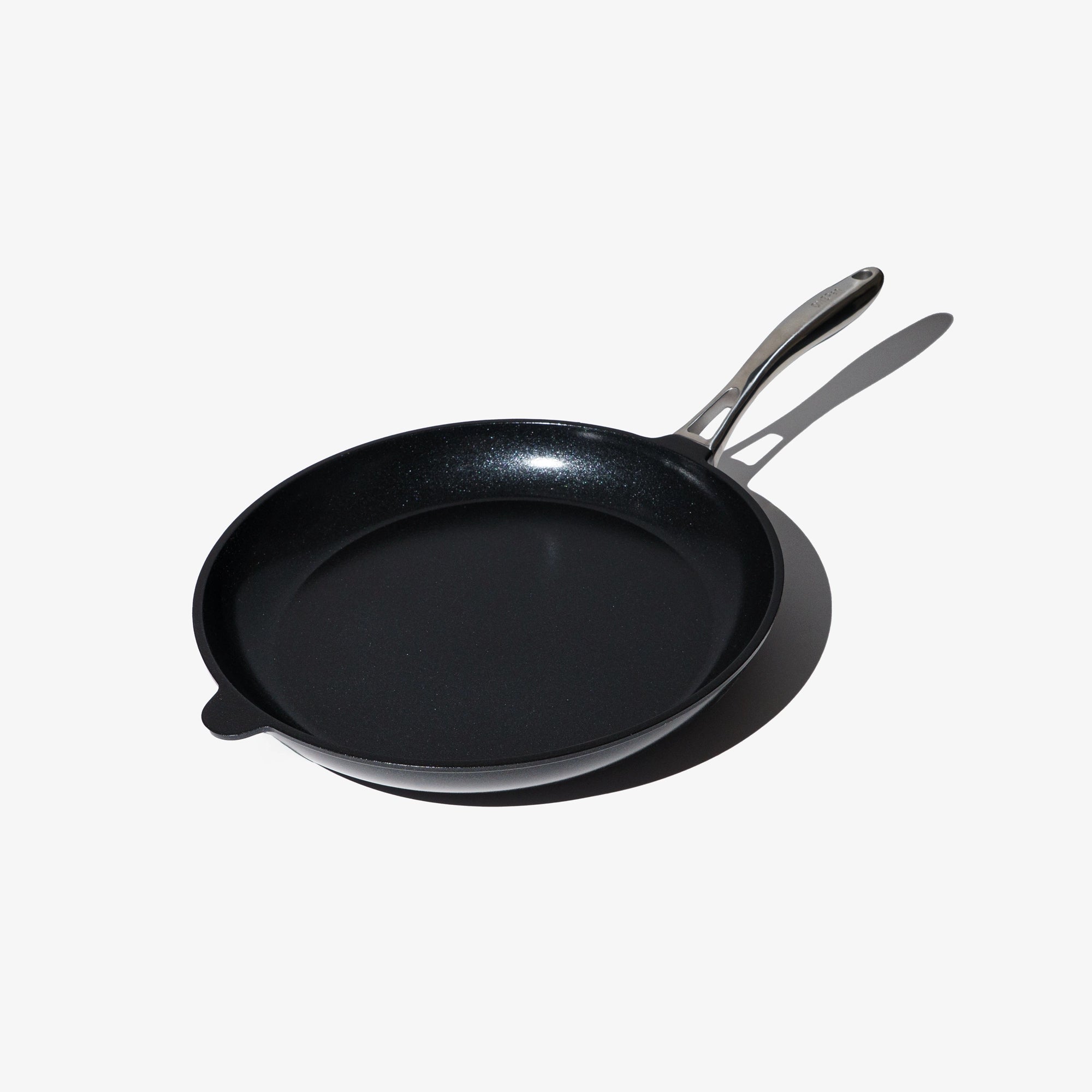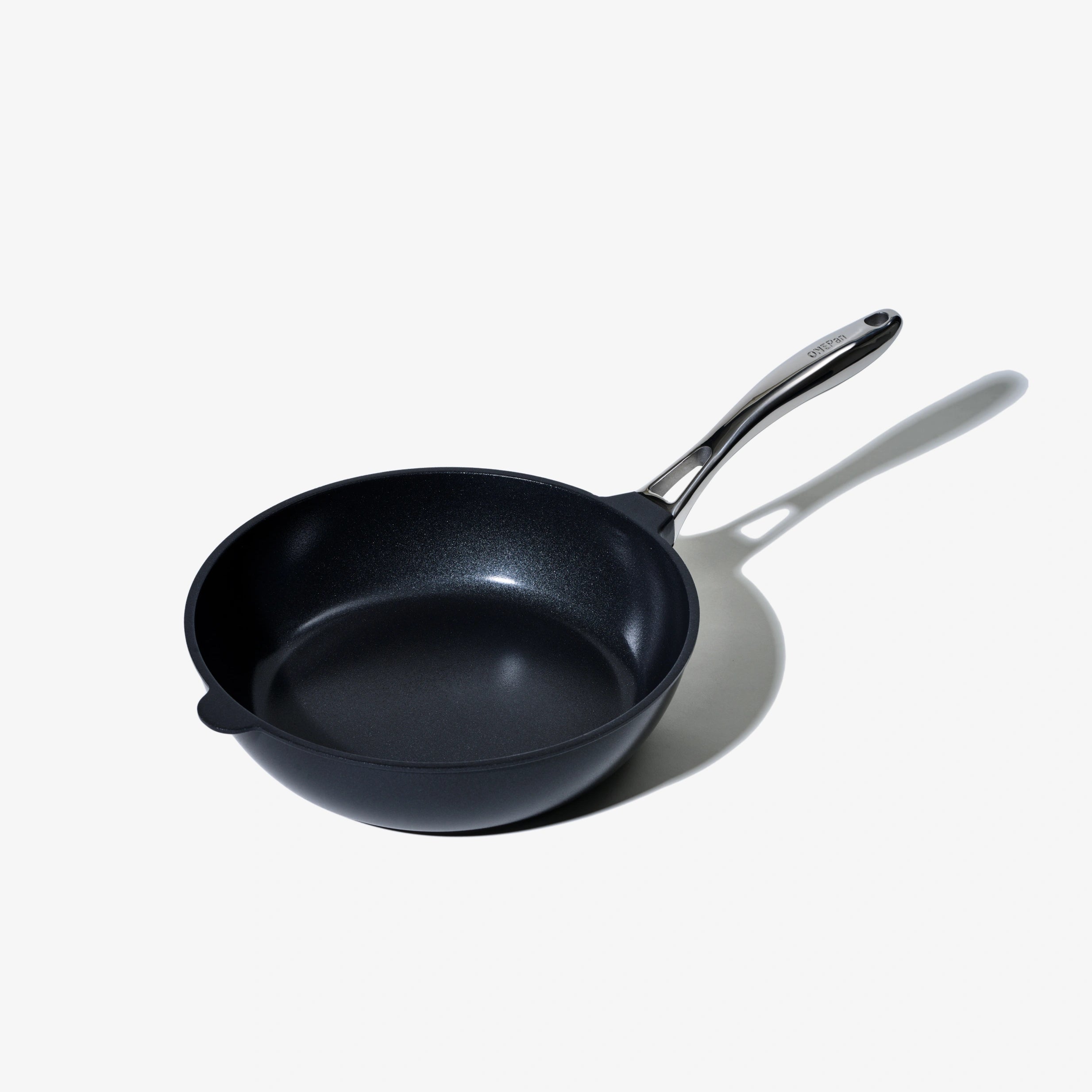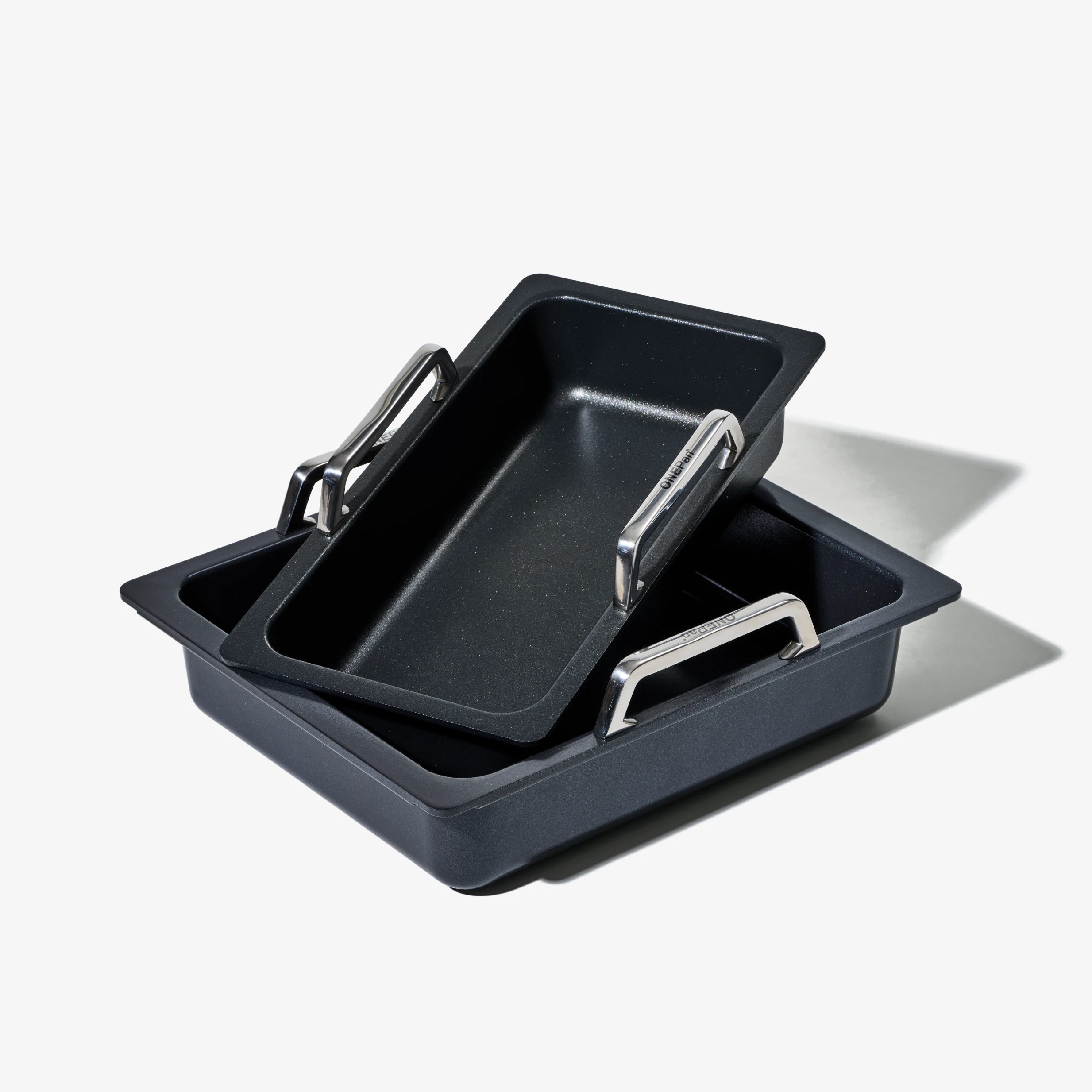






Non-stick without the nonsense
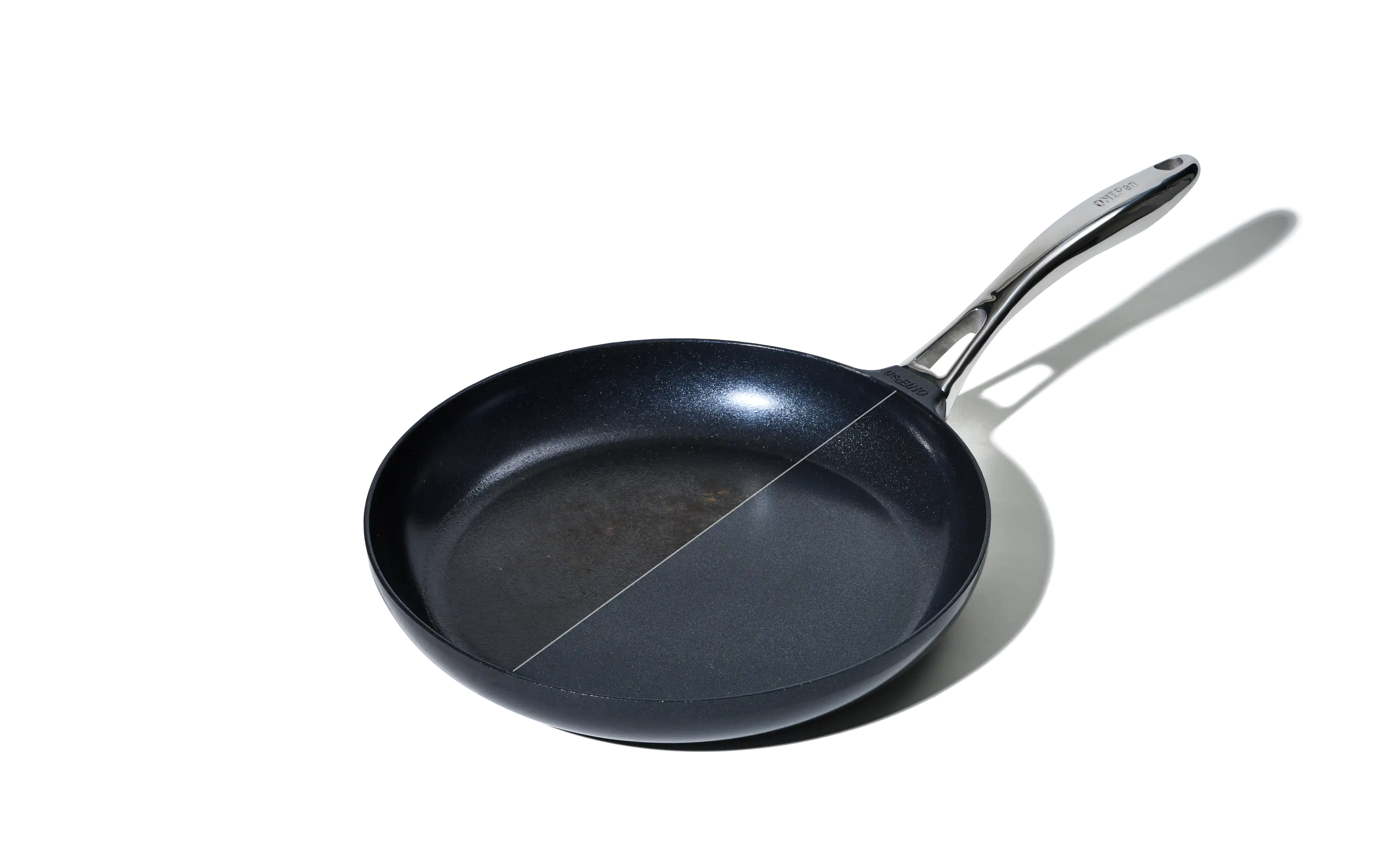
We see no logic in throwing away fully functional materials, such as the aluminum your OnePan is made of, just because the non-stick coating eventually wears out. By ordering a Re-Coat for your OnePan, you help reduce CO2 emissions by up to 95% compared with buying a new frying pan.
How do you renew with a Re-Coat?

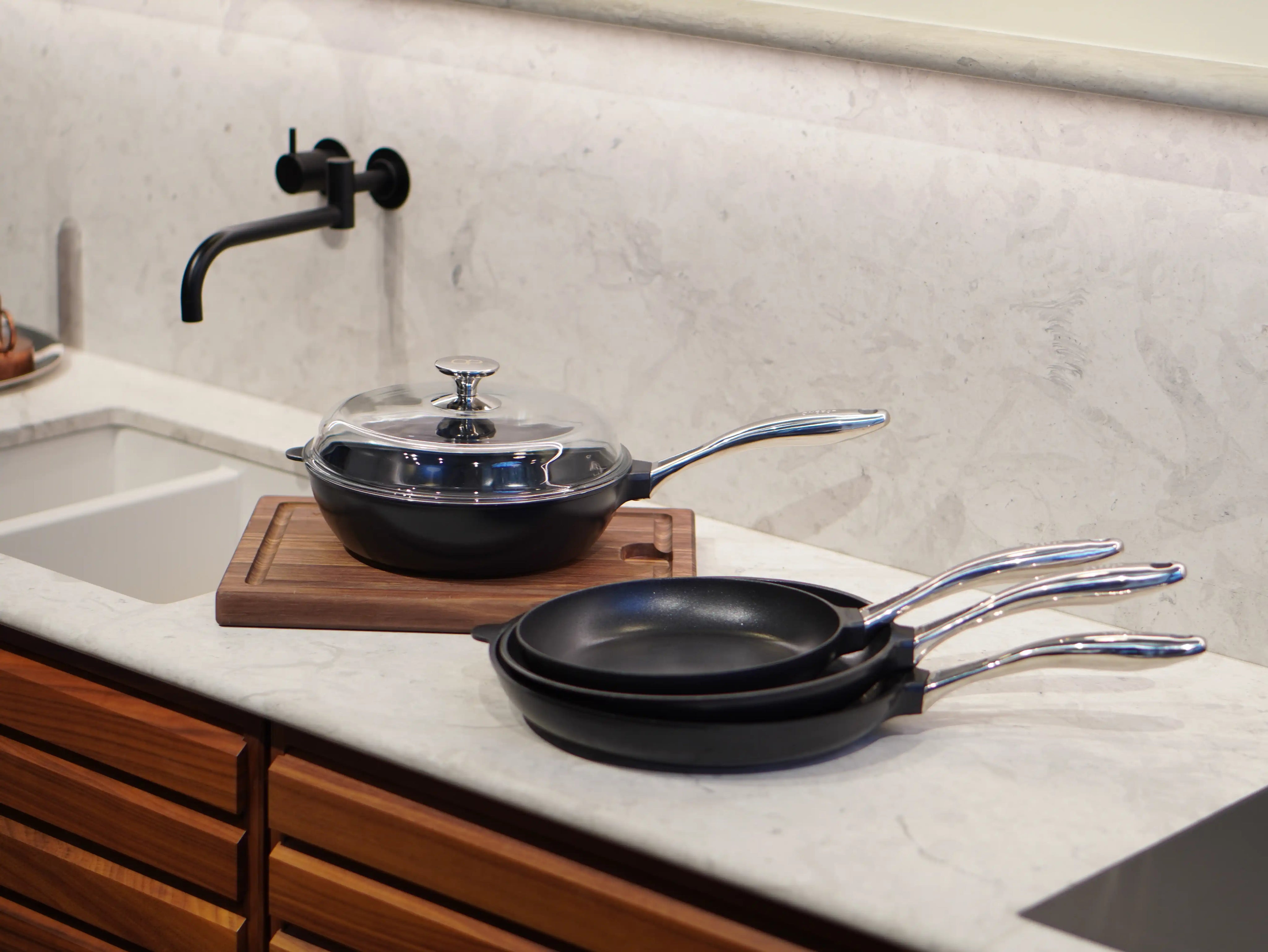
A circular pan, and not just because it's round.
OnePan exists to change how kitchen equipment is produced and used - and what happens to it at the end of its life.
“The world does not need more toxic, low-quality frying pans that are thrown away when the non-stick coating wears out. As a former chef, I saw this happen all the time. I had an idea and a dream to solve this kind of production and consumption when we founded OnePan: no more toxins, no more waste of functional materials.
- Mikael Wallborg, CEO and co-founder
Everything you want to know about Re-Coating
-
Our coating is ceramic, and its non-stick properties are created using silicon. The technology is called SolGel. It is non-toxic and made without any PFAS chemicals.
Silicon is an inert substance found naturally in both the human body and nature. -
All non-stick coatings have different lifespans depending on how they are handled and how often they are used. Since the owner of the frying pan may cook in it anywhere from once a week to three times a day, it is impossible to give a lifespan that applies to everyone. It is also a matter of personal preference when you feel that it no longer works as it should.
Our rule of thumb is therefore to order a Re-Coat when you would normally have thrown away your non-stick frying pan.
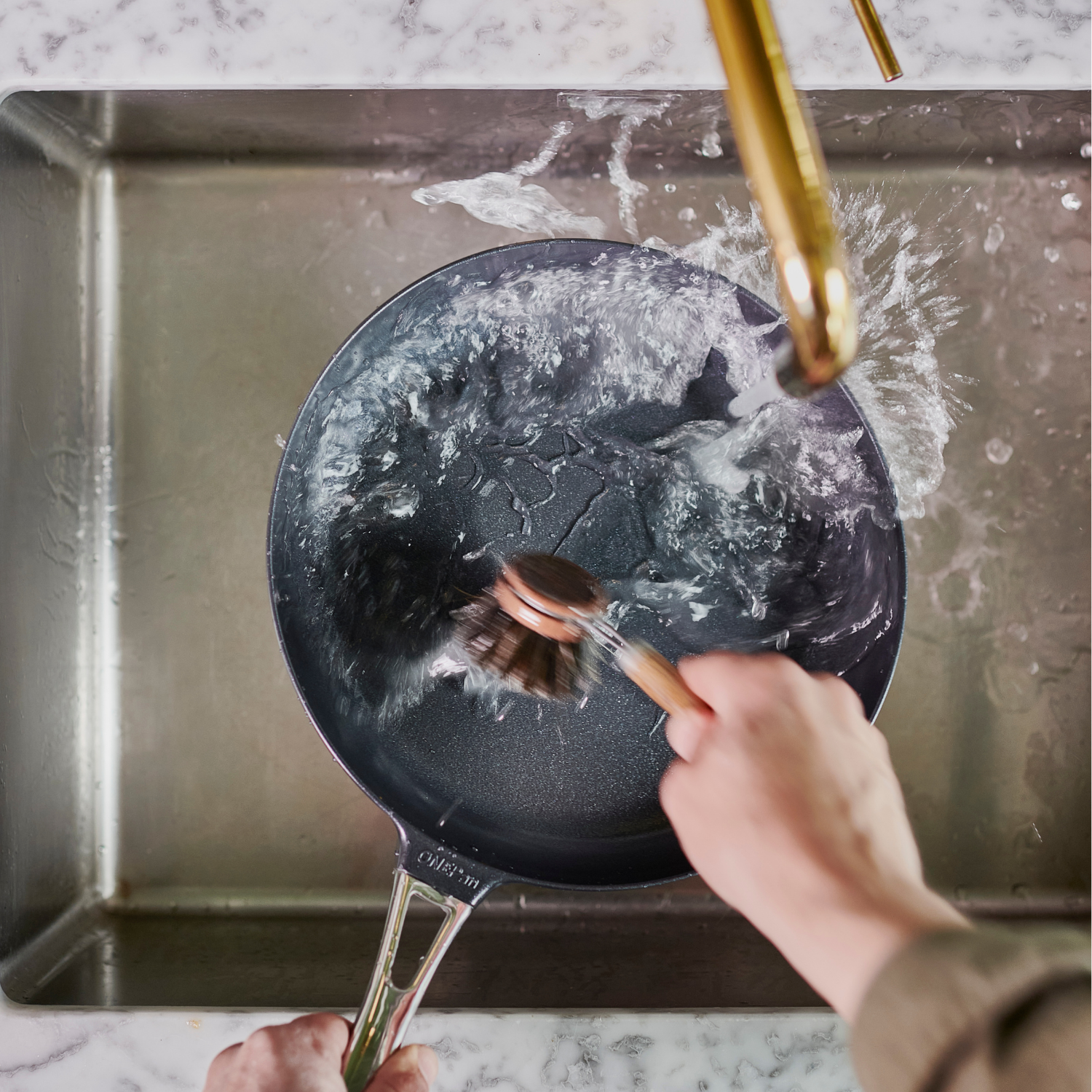
To extend the lifespan of your non-stick coating as much as possible, we recommend checking out our care instructions. -
PFAS are a harmful group of man-made chemicals used in a wide range of products to repel grease, dirt, and water from a surface. They can be found in products such as makeup, paper takeaway containers, ski wax, waterproof clothing, and kitchen products with a non-stick coating (such as Teflon).
Research shows that consuming PFAS over time increases the risk of cancer and hormonal disruptions, which can cause fertility problems for both men and women. They are also called "Forever Chemicals" because they can never be broken down by nature. This causes PFAS to accumulate in the environment and means they can be present in both the water we drink and the air we breathe.
A non-stick pan containing PFAS will release these toxic chemicals at the slightest scratch or if you overheat your frying pan. A OnePan does not, because we manufacture our products without using any PFAS chemicals whatsoever. Instead, we use a ceramic coating that can break down in nature and is harmless to the human body - even if the pan gets scratched.
-
Teflon is just one of thousands of coatings that contain PFAS. So regardless of whether the coating is called Stratanium, Titanium, or Diamond, it is probably made of PTFE (the technical term for highly fluorinated coatings). Don't be misled by claims that your pan is PFOA-free or PFOS-free; this is a tactic manufacturers use to create the impression that their products are free of toxins. All products that are not completely free of PFAS can still release toxins into your food.
-
In an ideal world, we would of course do this. Unfortunately, most frying pans are not designed to withstand a Re-Coat. Less durable frying pans will deform and lose their shape if they go through our Re-Coat process. More durable, premium frying pans often have handles that are either made of plastic or attached to the pan, making them impossible to coat.